Approach


Expertise
Overcoming barriers by professionalizing strategy, organization, and resource management.
Strategy
Clear direction instead of constant firefighting
Many organizations grow quickly, but their strategy remains diffuse. Critical decisions are taken based on gut feeling, and initiatives compete for attention.
Typical day-to-day situations:
- Many projects, but no clear priorities
- Strategic topics get lost in daily operations
- Decisions are delayed because direction is unclear
Our professionalization approach: we create strategic clarity and turn goals into robust decisions.
- Shared target picture and clear priorities
- Definition of a small number of focused strategic initiatives
- Decision frameworks that provide orientation
The result: Strategy becomes a working tool, not a slide deck. Leaders and teams know what they are working towards, what takes precedence – and what is deliberately not pursued.
Organization
Structures that sustain growth
As companies grow, legacy structures and processes often remain in place. Ways of working no longer fit the company’s size, and friction increases.
Typical day-to-day situations:
- Legacy processes slow things down and are hard to explain
- Silos hinder collaboration and transparency
- Roles and responsibilities are unclear or duplicated
Our professionalization approach: we align your organization with value creation.
- Design of end-to-end processes
- Clear roles, responsibilities, and interfaces
- Elimination of duplicate structures and unnecessary loops
The result: An organization that enables performance: processes are transparent, responsibilities are clear, collaboration is smoother. Growth no longer automatically leads to complexity, but to scalable operations.
Resource management
Focus and execution power in daily business
If everything is important, nothing is. Teams operate at their limits, projects compete for capacity, and progress remains opaque.
Typical day-to-day situations:
- Leaders are permanently overloaded and stuck in day-to-day operations
- Many initiatives are launched, but few are cleanly delivered
- There is little transparency on where resources are tied up and which measures are effective
Our professionalization approach: we strengthen steering and execution power.
- Operational prioritization of measures and projects
- Transparent steering of progress and outcomes
- Structures that combine accountability and relief for key roles
The result: Resources are deployed where they contribute most to value creation. Leadership regains room to steer, and initiatives are executed consistently – not just launched.
arumiq drives impactful results, fast.
Our value proposition:
- Execution over theory
- Empowerment over dependency
- Custom solutions over generic approaches
- Sustainable improvement over short-term wins
Results
Sustainable transformations, measurable results.

Efficiency improvement in logistics
Greater scalability through automation
Challenge: High manual effort and a lack of standards were limiting growth and efficiency.
Our approach: Analysis of the value chain, identification of automation potential, and implementation of scalable solutions to reduce operational effort.
Results: Higher scalability and better controllability of processes, more efficient use of resources, and sustainable cost savings of more than 5% within 18 months.

Digital transformation in the food industry
Efficient processes as the basis for ERP implementation
Challenge: Inefficient workflows and unclear responsibilities slowed down transformation and delayed ERP implementation.
Our approach: Definition of end-to-end processes, derivation of ERP requirements, and clarification of roles and responsibilities.
Results: Clear end-to-end processes, robust ERP requirements, and effective support for implementation.

Customer service transformation in the transport sector
New team structures for sustainable service performance
Challenge: Customer service needed to be repositioned and strengthened as a strategic success factor.
Our approach: Implementation of targeted initiatives, coordinated through a central PMO with clear structures and transparent progress tracking.
Results: Clearer team structures, higher internal satisfaction, quick wins realized early on, and noticeably improved customer satisfaction.

Post-merger integration in e-commerce
Seamless integration instead of duplicate structures
Challenge: Merger of two companies with different structures and overlapping operations. Without integration, inefficiencies and duplicate work were inevitable.
Our approach: Analysis of overlaps, definition of a clear integration target, and steering of implementation – from organization and IT through to logistics.
Results: Clear structures, reduced complexity, and streamlined end-to-end processes. Harmonized systems and centralized logistics as a foundation for efficient growth.

Strategic CRM in legal services
Stronger client relationships through client listening
Challenge: Collaboration with an important client had stagnated, with no clear levers for further development.
Our approach: Client listening via structured interviews and development of a clear, needs-based positioning.
Results: Greater transparency on decision-making, stakeholders, and expectations, a sharper client approach, and a significantly stronger client relationship.
About us
Value creation with arumiq: pragmatic, agile, effective
Who we are
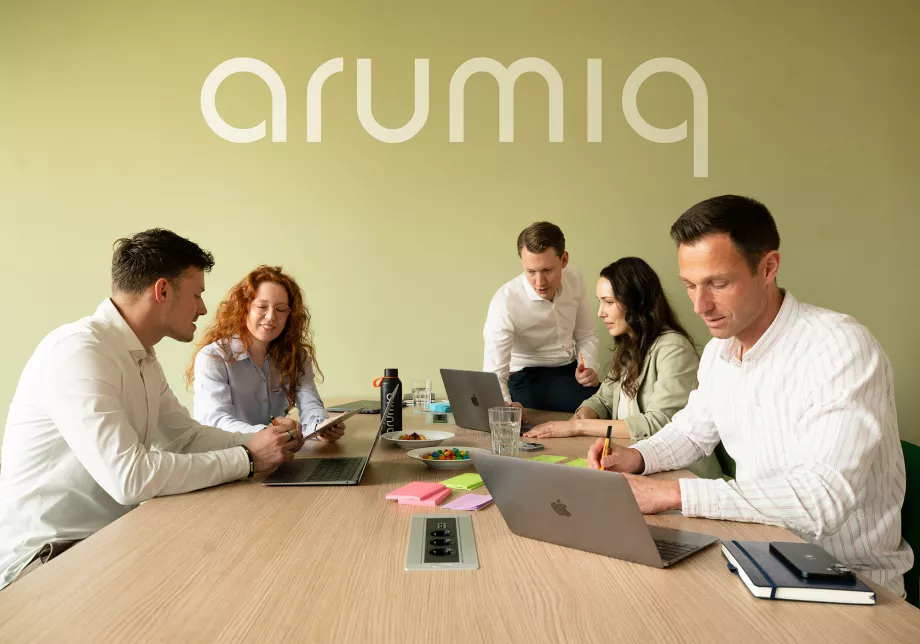
arumiq Consulting specializes in increasing value creation for mid-sized companies. Our team combines broad industry experience with deep implementation expertise. This allows us to deliver robust results in a short time – instead of long concept phases.
What drives us
We help our clients overcome growth barriers. In doing so, we increase their ability to execute and strengthen their long-term competitiveness. We work closely with our clients’ teams, leverage their know-how, and focus on pragmatic solutions that work in day-to-day operations.
How we work
We restore clarity, focus and control to organisations and empower them to utilise these structures themselves on a long-term basis.
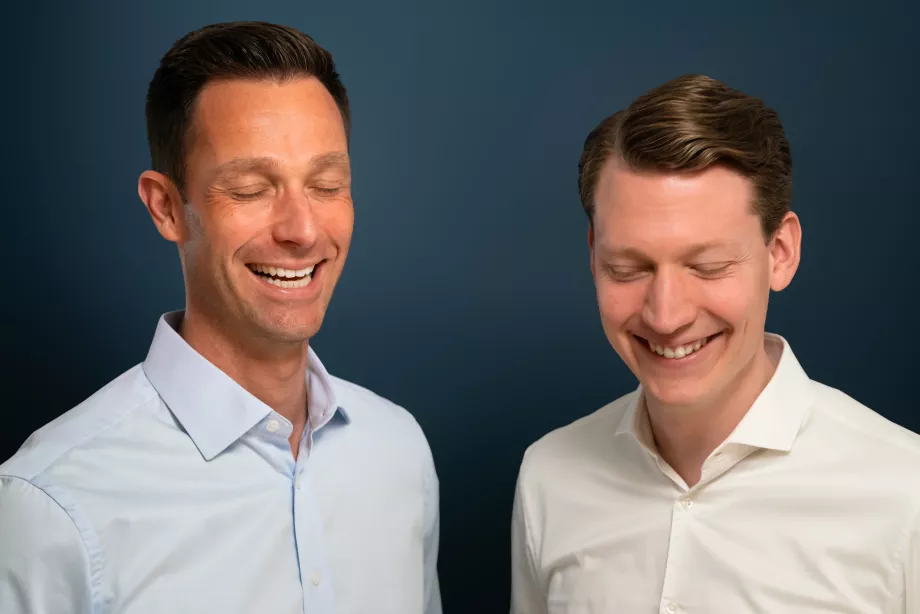
Who is behind arumiq? Christoph Laut and Patrick Kanters talk about the idea behind arumiq, their fascination with small and medium-sized enterprises, and their commitment to clarity.
Interview
A conversation with the founders
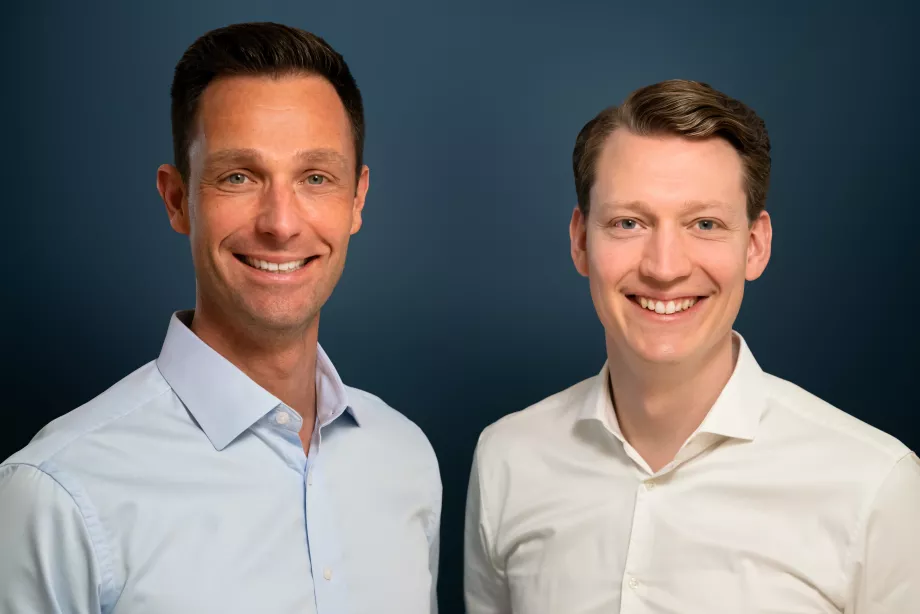
arumiq Consulting. What is it all about for you?
Christoph: At its core, we are a consultancy for SMEs. Mid-sized companies often bring impressive operational strength. They stay close to their customers, act pragmatically, and make bold decisions. That is exactly what we value.
At the same time, in the day-to-day reality of many organizations, we see typical tensions: too many topics running in parallel, a lack of transparency, and an overall sense of permanent exception mode. That is exactly where we come in. We help companies address their organizational challenges in a focused way and professionalize their organization for the next stage of development.
Can you describe these tensions in more concrete terms?
Patrick: They often show up in seemingly small things. Processes no longer fit together cleanly, and error rates begin to rise. More importantly, internal friction increases. Roles and responsibilities are no longer clearly defined, and decisions take too long. That often leads to frustration within teams. Sick days increase, and in the worst case, employee turnover rises as well.
In most cases, companies are already aware of these issues. Even so, they often try to tackle too many things at once. What is missing is clear focus. In situations like this, the problem is rarely a lack of competence. More often, what is missing is structural clarity.
So where does arumiq step in specifically?
Christoph: Together with our clients, we get to the root causes. Patrick mentioned clarity, and that is the decisive lever. It is about effective processes, clear responsibilities, and leadership that provides direction.
At the center of our work is always the professionalization of the organization. We help companies move into a state where they can once again be actively led and strategically managed, instead of merely reacting to day-to-day business.
What makes arumiq different from other consultancies?
Patrick: We do not rely on standard templates. Every company has its own reality. That is why we listen carefully first, draw the right conclusions and then develop an approach together that truly fits.
We work closely with the people in the organisation – directly, as equals and with an honest view of their specific situation. This creates solutions that work in day-to-day practice: with clear structures, unambiguous decision-making processes and ways of working that provide direction and reduce friction.
Christoph: And from the very beginning, we address openly what is really going on. We support our clients in drawing the right conclusions from organizational tensions. That is not always the most comfortable path, but in our experience, it is the one that leads to truly sustainable development.
What does sustainable development mean in this context?
Patrick: By the end of a project, the outcome is usually clear value-creation processes, clean interfaces, and professionalized workflows, in both administrative and operational areas. That is how we measure our work.
Christoph: The impact is often felt quickly. Many employees regain motivation because sources of frustration are removed and a shared understanding is restored. Over the long term, companies benefit from more satisfied customers, stronger margins, and greater responsiveness. The organization becomes more resilient and significantly more effective in day-to-day operations.
Can you give an example from practice?
Patrick: One client in the logistics sector wanted to digitalize in order to enable further growth. Internally, however, the initiative kept being postponed. We helped them focus on the essential core processes and broke the initiative down into manageable, actionable steps.
The impact was clear on several levels. Operationally, more than five percent of costs were saved within 18 months. Even more important, however, was the change within the organization. What began as standstill turned into a committed team that is now driving the next wave of digitalization forward on its own. That is what we mean by sustainable enablement.
One final question: how does such a transformation begin? What is the first step?
Christoph: Take your perception seriously. If you are observing organizational tensions in your company, it is worth taking a closer look. Decision-makers often sense early on which symptoms point to deeper underlying causes. That instinct is valuable.
The first step is not to ignore those signals. If you would like, we can discuss them in an initial, non-binding conversation. We reflect your observations back to you, assess them together, and give you an honest, professional perspective.
Career
Your Future Starts Here – Join Our Team!
Vacancies

Contact
Let’s Tackle Your Challenges Together.
info[at]arumiq.com